Winter is at its peak, and for homeowners in cold climates, this season can be especially demanding. Snow-covered roofs may look peaceful and picturesque, but when snow and ice accumulate, cold-weather gutter problems can quietly create serious risks. Ice dams, icicles, water leaks, foundation erosion, and even permanent gutter damage often begin with something simple: gutters that can’t function properly in freezing conditions.
That’s why understanding gutter function in cold weather is so important. Gutters aren’t just about directing rain, they play a critical role in managing melting snow, ice buildup, and winter precipitation. When they’re properly designed, installed, and maintained, gutters help protect your roof, siding, fascia, and foundation from costly winter damage.
As a local, family-owned exterior remodeling company with more than 25 years of experience, Stein Home Solutions provides roof replacement, siding installation, seamless gutters, and professional home performance consultations. We help homeowners prepare for harsh winter conditions and prevent avoidable damage before small issues turn into expensive repairs.
Let’s take a closer look at how winter weather affects gutters, what warning signs to watch for, and what you can do to maintain proper winter gutter drainage throughout the coldest months of the year.
Why Gutters Matter More in Winter Than Any Other Season
Most homeowners think about gutters primarily during heavy rainstorms. But winter actually places greater stress on your gutter system than any other season.
During winter, gutters must handle:
- Snow accumulation on the roof
- Freeze-thaw cycles that expand and contract materials
- Sudden snowmelt during warmer daytime temperatures
- Refreezing overnight when temperatures drop again
If gutters aren’t working correctly, melting snow has nowhere to go. Water backs up, freezes, expands, and starts forcing its way into places it doesn’t belong under shingles, behind siding, or directly against your foundation.
The Real Impact of Cold Weather on Your Gutter System
Cold temperatures, snow, and ice place constant strain on your home’s drainage system. When drainage slows or stops, water often backs up into your roof system or spills directly against your home’s exterior and foundation.
1. Freezing Temperatures
When temperatures drop below freezing, any standing water inside your gutters can freeze solid. Even a thin layer of ice is enough to block normal water flow.
As ice builds up, it creates two major problems:
- Excessive weight that can cause gutters to sag, pull away from the fascia, or tear loose entirely
- Structural stress at seams and joints, which can lead to cracks and leaks once the ice melts
Over time, repeated freezing and thawing weakens gutter materials and fasteners, shortening the lifespan of the entire system.
2. Snow Accumulation on the Roof
Heavy snow resting on your roof doesn’t just sit there harmlessly. As your home loses heat through the attic and roof deck, snow begins to melt unevenly often faster in warmer sections of the roof.
This meltwater flows downward toward the gutters. If gutters are frozen, clogged, or improperly pitched, the water refreezes at the roof edge. This is one of the primary causes of ice dams.
3. Ice Dams and Icicles
Ice dams form when melting snow refreezes at the roofline, creating a solid ridge of ice that blocks proper drainage. As more snow melts behind the dam, water is forced backward under shingles and into the roof structure.
This can lead to:
- Roof deck rot
- Wet insulation
- Interior ceiling stains
- Mold growth inside attic spaces
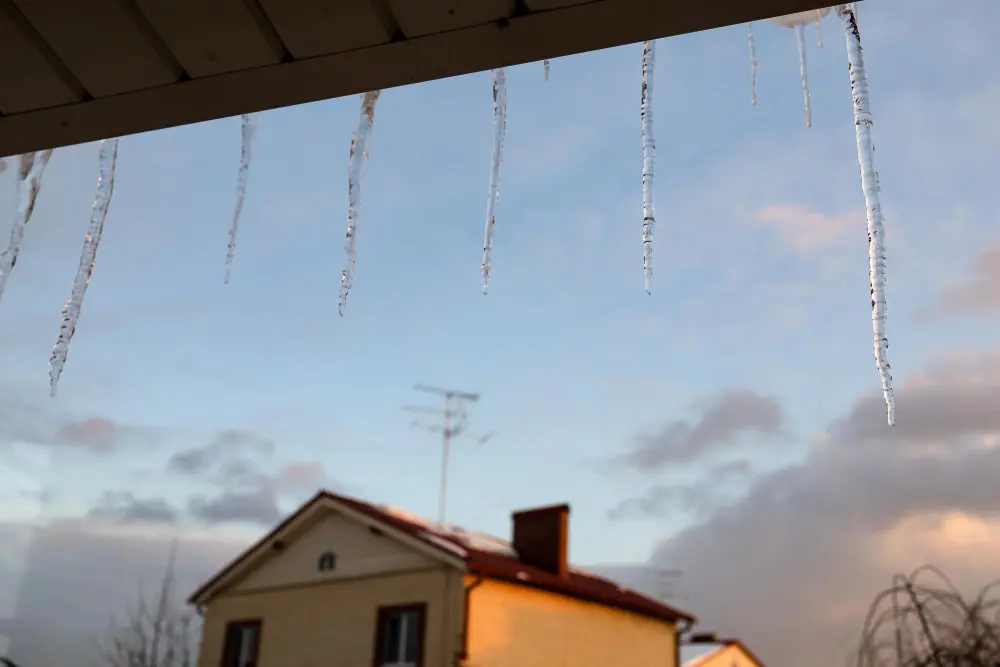
Icicles often form at the same time. While they may look decorative, icicles are a clear warning sign that winter gutter drainage is failing. They also pose serious safety risks to people and pets below.
4. Hidden Structural Damage
One of the most dangerous aspects of winter gutter failure is that damage often happens out of sight.
When water can’t drain properly, it may:
- Seep behind siding
- Saturate soffits and fascia boards
- Pool near the foundation
- Freeze and expand in cracks
Over time, this leads to wood rot, foundation erosion, basement leaks, and mold issues that may not become visible until repairs are extensive and costly.
Cold-Weather Gutter Problems Homeowners Should Watch For
Recognizing early warning signs can help prevent major winter damage. Common indicators of gutter problems in cold weather include:
- Sagging or pulling gutters
- Cracked seams or split downspouts
- Overflowing gutters during snowmelt
- Water stains on siding or foundation walls
- Persistent icicles along roof edges
These symptoms usually indicate that your gutter system is not handling gutter function in cold weather effectively and may need professional attention.
Do Gutter Guards Work in Cold Climates?
Many homeowners ask, “Do gutter guards work in cold climates?” The answer depends on the type of guard and how it’s installed.
High-quality gutter guards can:
- Reduce debris buildup before winter
- Minimize standing water that freezes
- Improve overall winter gutter drainage
- Reduce the need for mid-winter cleanouts
However, poorly designed or improperly installed gutter guards can actually trap ice and snow, making winter drainage worse.
That’s why professional assessment is essential. A system that works well in warmer climates may not perform the same way in areas with heavy snow, ice, and freeze-thaw cycles.
What Are the Best Gutters for Cold Climates?
Not all gutter systems are built to handle winter stress equally. The best gutters for cold climates typically include:
- Seamless aluminum gutters – fewer joints mean fewer freeze points and leaks
- Properly sized downspouts – allow snowmelt to drain efficiently without backing up
- Correct pitch and slope – prevents standing water that can freeze
- Secure fastening systems – withstand heavy snow and ice loads
At Stein Home Solutions, we design and install gutter systems specifically engineered for cold-weather performance, taking roof pitch, snow load, and drainage patterns into account.
Preparing Your Gutters for Winter
Proactive maintenance is one of the most effective ways to protect your home during winter months. Before freezing temperatures set in, homeowners should:
- Clean gutters thoroughly to remove leaves and debris
- Inspect for loose fasteners, sagging sections, or damaged seams
- Ensure downspouts direct water safely away from the foundation
- Check roof edges for early signs of ice dam formation
- Schedule a professional inspection if problems persist
Routine maintenance plays a major role in preserving proper gutter function in cold weather and preventing emergency repairs mid-winter.
Why Professional Installation and Inspection Matter
Even high-quality materials can fail if gutters are improperly installed. Incorrect slope, undersized downspouts, or poor fastening methods often don’t show problems until winter conditions expose them.
A professional inspection can identify:
- Drainage inefficiencies
- Ice-dam risk areas
- Structural weaknesses
- Opportunities for upgrades before damage occurs
Addressing these issues early helps protect not just your gutters, but your entire home.
Protect Your Home This Winter
Cold weather doesn’t have to mean costly damage. With the right gutter system, proper installation, and ongoing maintenance, your home can stay protected throughout even the harshest winter conditions.
If you’re experiencing drainage issues, ice buildup, or want to upgrade your gutters for better winter performance, contact Stein Home Solutions today to schedule a consultation. Our experienced team is here to help safeguard your home, season after season.