The foundation of your home is constantly under threat because of rain, melting snow, and changing of soil composition. If there is no proper way for water to go, it will build up around your walls and undermine your foundation. And this is precisely the reason why gutters protect your home from foundation damage, basement problems, and expensive repairs in the future.
Stein Home Solutions has been providing gutter solutions for homes in Wisconsin since 1995. We know all about what should be done to preserve your foundation intact throughout all seasons, and the installation of gutters is one of the most simple solutions to it. And we can check yours absolutely free of charge.
How Gutters Protect Your Home From Getting Water Damaged
As soon as it starts raining, water has no place to go but straight into the ground beside your basement or crawlspace. Instead, gutters channel the water through your downspouts. This is crucial because without gutters, water will continuously saturate the soil, which changes its volume depending on the temperature outside. Thus, there is constant pressure put on the walls of the foundation.
Cracks begin to form due to that pressure, and then they grow bigger and bigger each year. The importance of having a gutter foundation protection system cannot be overstated since it helps to protect the concrete from becoming wet, which can harm the walls of the foundation. Houses that have gutters usually have no basement leaks and no property-line erosion.
Why Is It Important for Your House to Have Proper Gutter Drainage?
Good gutter drainage prevents any water accumulation where it should not be. If the gutters become clogged, have poor slope, or some other issues arise, the water accumulates, gets backed up, and pours over the sides of the gutters without being properly carried through the downspouts into the proper drainage spot.
This issue becomes especially important during heavy rainfall and snowmelt, which occurs in Wisconsin during the spring season. This is when the soil gets saturated and cannot take any more water. Proper drainage will not only prevent additional issues with the walls, landscaping, and driveways but will also help to preserve the value of your house in the future.
Signs Your Gutters Need Replacing
The signs your gutters need replacement tend to develop slowly, which means that most people don’t realize how much trouble their gutters have been in until water damage occurs elsewhere. Look out for any signs of sags, rust, cracks at joints, or gaps between the gutter and the fascia boards. Any peeling paint or moisture stains on your exterior siding beneath the gutter can indicate leaks.
Of course, not noticing these issues will probably mean that they won’t just fix themselves. A damaged gutter system will usually result in flooding in areas near your home’s foundation, rather than safely directing the water away from the structure. It will be much cheaper to deal with these issues when they are first noticed, as opposed to later.
Seamless Gutter Installation in Wisconsin: Tailored for the Weather
In Wisconsin, there are extreme weather conditions during summers and winters, and you need your gutter system to withstand these without problems. Your gutter is cut precisely according to the specifications of your roofline to ensure that there is no joint in which leakages can occur.
The seamless gutter installation in Wisconsin not only suits the climate but is also customized according to other things like snow and ice accumulation. In fact, Stein Home Solutions has been providing seamless gutter installations to residents of Southern and Southeastern Wisconsin for decades now, taking measurements of their roofs before suggesting any system.
Tips for Gutter Maintenance That Protect Your Foundation
No matter how well constructed a gutter system may be, some basic maintenance will help ensure that it continues to function effectively. Cleaning leaves and debris out of gutters twice a year ensures that clogs do not form, causing water to flow over the edge instead of down the downspouts. Inspecting the brackets and looking for signs of leaks following big rains also provides valuable information on the condition of the system.
Following these gutter maintenance tips goes beyond protecting the gutters themselves. Properly pitched gutters and gutters that are kept clean ensure that the water flows correctly, away from the house and not toward the siding, windows, or the foundation itself.
The Real Cost of Ignoring Gutter Problems
Even a small gutter problem won’t stay small for long. An initial overflow in one storm will eventually turn into your flower beds being flooded, your basement wall being damp, or even your fascia board turning into rubble when pressed lightly. The cost of fixing this kind of problem is significantly lower than having your foundation wall cracked or your basement in need of waterproofing.
While homeowners tend to wait for their problem to become apparent from the street, their foundation problems tend to appear underground first. The moment cracks start appearing on your internal walls or doors start sticking to their frame, chances are your soil has been absorbing water for several months at least.
Connection between Your Roof and Gutters
While the gutters work separately from other components of your house’s exterior, the roof line affects how much water drains into the gutters and how quickly. Thus, the pitch of your roof, its valleys, and the condition of shingles can all influence the efficiency of the gutter system. Sometimes, if the roof drains water inefficiently, a perfectly good gutter will be overwhelmed in certain areas anyway, regardless of how efficient it is.
This correlation also manifests itself during cold months, when improper attic insulation or ventilation leads to ice dams along the edges of the roof. Ice dams push the melting snow under the shingles into the gutters, which are not made for storing ice. Considering the roof and the gutters as a single entity, not as two separate issues, helps to detect the true source of the problem rather than its symptoms.
How Do Proper Downspouts Help With Foundation Protection?
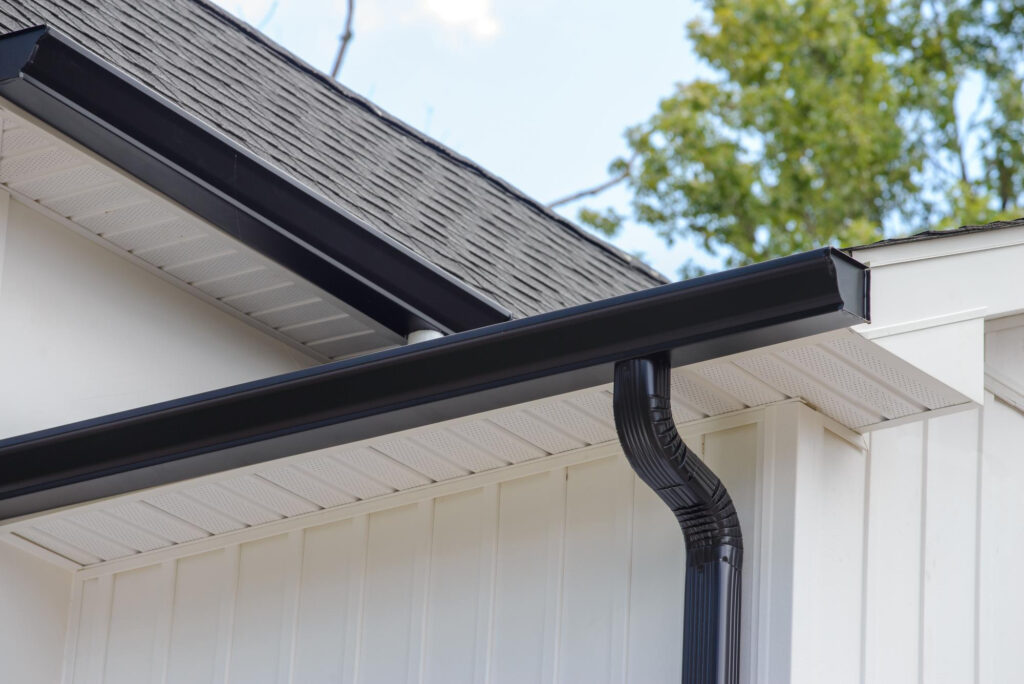
Gutters are only half of the solution, as downspouts will do the rest of the work, taking water away from around your home. Proper downspout installation requires the right spacing on the perimeter of your roof and with their outlets at several feet from the foundation.
In case downspouts have an outlet that is too close to your house, or you just do not have enough downspouts for your roof size, the collected water will be pooled in the last place where your foundation does not need it. This is a frequently forgotten part of drainage but still very important for proper foundation protection.
Importance of Gutter Slope for Proper Drainage
Even if your gutters look like they have been properly installed, failure will occur if they are not pitched. Gutters require a slightly descending grade towards the downspout; for example, the ideal pitch is 1/4 inch per 10-foot length of the gutter. This enables water in the gutter to flow downwards and prevent stagnation in the troughs formed in the gutter. Stagnant water in improperly pitched gutters creates excess weight and leads to stress on the bracket that results in the sagging of the gutter system.
Besides, stagnant water causes quick freezing of the water in winter, which increases the stress on the hanger fastening the gutter system to the fascia board. Gutters with improper slopes wear out relatively faster compared to gutters installed with the proper slope, even though they are of the same materials.
Gutter Cleaning Requires Attention to Tree Placement
While the trees that grow near your home may not seem important in relation to the gutters on the roof, they actually have an effect. The branches that hang over the house drop leaves, seed pods, and small twigs straight into the gutters, and these tend to accumulate the fastest during the fall season and after the spring rains. Houses that have many trees nearby will require gutter cleaning much more often compared to homes with few or no trees in the vicinity.
The root systems of the trees can also influence the process of drainage in some way if they are positioned to disrupt the natural slope of the yard or to interfere with the buried downspout extension. Limiting the growth of branches that extend over the house will lower the amount of debris accumulating in the system.
Provide Your Foundation with Proper Protection
Your foundation issue probably didn’t start out as a foundation issue. It likely originated from water that had nowhere else to go, as well as a gutter system that was too ineffective at moving it. Making sure your gutters are clean, pitched properly, and equipped with appropriately placed downspouts is among the easiest ways to preserve your valuable investment in your home.
Stein Home Solutions has provided its services in Wisconsin for almost 30 years, providing solutions ranging from entire gutter replacement to maintenance services in all seasons. With our licensed experts inspecting your house and recommending the best option for handling any gutter situation, no matter how tough, we’ll install a system that will handle anything Wisconsin can throw at it.
Call us for a free estimate if your gutters appear old, sag in certain places, or just need to be inspected.
FAQs:
1. What is the timeline by which blocked gutters will affect a foundation?
Not right away, but continuous overflowing over just a few rains will saturate the soil to the point that there is sufficient pressure exerted on the foundation walls. Depending on your soil and grading, you might see signs of cracks or water in the basement within one or two rain seasons.
2. Is a seamless gutter system more durable than sectional gutters?
Yes, primarily due to their lack of seams, which can be a source of leaking after some years. A seamless gutter system that is properly installed and maintained usually lasts longer than a sectional gutter system with many seams subjected to the freeze-thaw process in Wisconsin.
3. Will gutter guards make regular maintenance unnecessary?
While gutter guards minimize debris inside the gutters, they do not prevent maintenance from being necessary. Fine debris such as needles from pine trees and granules from the shingles can still gather over time.
4. What distance should the downspout be from the foundation of the house?
In most cases, the distance should be between four and six feet, but houses with problems in their yard, such as poorly graded yards and clay soil, need greater distances. The contractor can evaluate your yard and give you recommendations about the proper distance.
5. Is the damage to the foundation from malfunctioning gutters covered by homeowner’s insurance?
The coverage differs among policies. Some cases of damage to the foundation that result from negligence on the part of the homeowner cannot be covered under insurance policies. You can consult your insurance policy details or ask the insurance agent directly to know what is covered.